
Blog
Of Soil, Seeds, and the Tending of Oaks
June 26, 2026
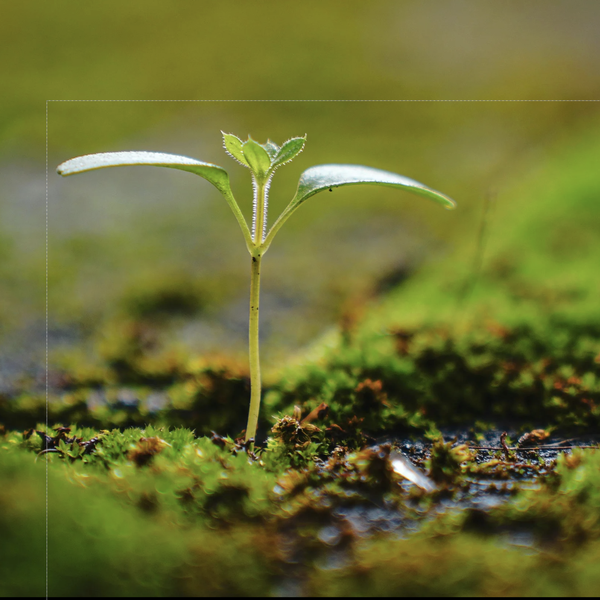
I’ve been thinking about ecology a lot lately — how wolves alter trout populations, how sea stars reshape tide pools, and more recently, about soil.
Not to the exclusion of buildings, enrollment curves, or budgets- but a lot about ecology.
If you walk through an old-growth forest, what captures you initially is height — trunks rising with quiet authority, branches widening toward the light, a canopy that feels almost architectural. Strength is visible. Maturity is visible.
But linger longer, and your attention may drift downward- to the soil beneath your feet. Beneath the surface, an entire unseen world is at work — The invisible web of roots and fungal threads weaving together, nutrients cycling, decay feeding growth, quiet networks sustaining everything above ground.
Stability is not accidental. It is cultivated slowly, beneath notice.
The canopy is visible, but the soil quietly establishes the conditions in which trees either flourish or struggle.
Schools are ecosystems in much the same way.
From a distance, most people, understandably, see the canopy of a school — academic outcomes, athletic records, college admissions, performances, polished events. These are not trivial indicators. Fruit matters. Leaves matter.
But fruit is always downstream of soil.
What ultimately shapes a child is the unseen network of formation — what is assumed about truth, what is reinforced about identity, how authority is exercised, how correction is handled, what earns celebration, what earns silence. It is the rhythm of daily life, repeated thousands of times, that slowly trains reflexes of the soul.
In other words, it is the soil.
Education, in its most basic sense, is sowing. Ideas are planted. Habits are rehearsed. Loves are trained. Convictions are shaped. But the long-term fruit of that sowing depends not merely on excellence in instruction, but on the condition of the ecosystem in which it takes root.
We cannot command the seed to grow. We cannot manufacture transformation. The Apostle Paul was clear about that. “I planted, Apollos watered, but God gave the growth.” There is humility in that sequence. We are not architects of spiritual life. We are stewards of conditions. Planting matters. Watering matters. Growth belongs to God.
And here is where we must speak plainly: the question is not whether our children are being discipled. They are. The question is by whom, and toward what end.
Every environment catechizes. Every culture trains. Every repetition shapes.
If we do not tend the soil intentionally, it will still grow something. Formation is inevitable. The only variable is direction.
J. C. Ryle once wrote of the importance of shaping an oak while it is young. Bend it early, he argued, and it grows upright. Neglect it, and you will wrestle against its grain for a lifetime. His point was not sentimental. Oaks become sturdy through early formation. Strength later is the result of shaping earlier.
Scripture gives us language for what such formation can become: “oaks of righteousness, the planting of the Lord for the display of His splendor.” (Is 61:3) Oaks grow slowly. They deepen before they widen. They endure because their roots are not shallow.
The Apostle Paul adds another layer to the metaphor in Ephesians 4. He describes maturity as a condition in which we are no longer “tossed to and fro by the waves and carried about by every wind of doctrine.” If we desire lives that endure cultural winds — lives that are courageous without being combative, compassionate without being compliant, resilient without being brittle — then we must tend the soil while the growth is still young.
Children grow up in a storm of competing narratives — about identity, authority, truth, and purpose. Cultural winds are not neutral; they are formative. Screens disciple. Algorithms catechize. Peer dynamics instruct. If we do not cultivate intentionally, we should not be surprised by what grows.
Whole-Life Discipleship is our refusal to assume that roots will deepen on their own. It is our commitment to steward the soil faithfully during the hours entrusted to us.
But this work does not belong to the school alone.
The soil of a child’s life is not confined to a campus.
The home is primary. The church is essential.
The school is neither replacement nor rival. It is a buttress — reinforcing, strengthening, aligning. When home, church, and school share a coherent vision of what it means to live under the lordship of Christ, the soil deepens. When those ecosystems compete or fragment, roots struggle.
Parents sow daily through ordinary faithfulness — dinner table conversations, modeled repentance, practiced forgiveness. The church waters through worship, preaching, teaching, community. The school does not replace either; it buttresses them. It strengthens what is already being planted. It reinforces what is already being watered— in classrooms, hallways, practices, rehearsals.
It is not a program layered onto the school. It is not a department with a budget line. It is an operating system — rarely visible, but quietly shaping how everything runs.
It influences how teachers teach — not merely delivering content, but discipling minds. It shapes how coaches coach — forming character, not just competitors. It informs how discipline is handled — correction aimed at restoration, not humiliation. It guides hiring decisions, governance decisions, budget decisions. It even influences how we think about growth and expansion.
Because ecosystems either reinforce their stated values or erode them.
If we desire oaks, we must cultivate deep soil.
Oaks do not mature in a season. Roots deepen slowly. Much of the most decisive growth is invisible for years. The daily work of formation rarely feels dramatic. There are seasons of planting and seasons of watering and seasons in which growth appears imperceptible- moving at a botanical pace.
But we remain convinced that tending soil matters. Thus we sow faithfully. We water consistently. We align structures carefully. And we trust that God gives the growth.
Years from now, when graduates scatter into vocations and communities beyond our sight, the visible canopy of their lives will tell a story. Not merely about academic preparation or extracurricular achievement, but about the ecosystem that shaped their loves, their reflexes, their endurance.
Our prayer is not merely that they will succeed, but that they will mature — not blown about by every cultural gust, but grounded in truth, resilient in adversity, humble in strength. Standing firmly as quiet testimonies to the grace of God.
Whole-Life Discipleship is not an addition to what we do. It is our commitment to tend the ecosystem beneath everything we do — trusting that in God’s providence, strong oaks will rise from deep, well-tended soil.